
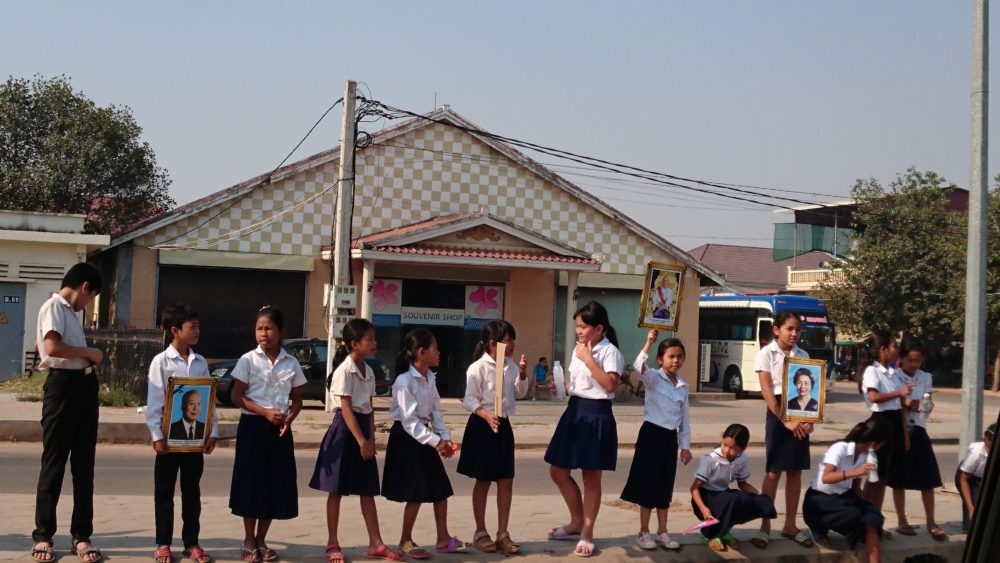
Education & Jobs Crucial As Cambodia Records Pro-Poor Growth

By Neena Bhandari

Siem Reap/Battambang (Cambodia), 30.03.2017 (IDN) – The once conflict ridden, impoverished country of Cambodia has made significant strides towards stability and progress, but it is still facing several socio-economic development challenges.

In 2016, it became a lower middle-income country after recording an annual average economic growth of seven percent over the past decade. “The country’s economy has trebled and the number of people living in poverty has halved in the last 15 years. We have to set development issues in the context of those successes,” says Nick Beresford, United Nations Development Programme’s (UNDP) Cambodia Country Director.

Continue reading

More Indigenous Doctors Aim To Close Australia’s Health Gap

By Neena Bhandari

Sydney, 27.12.2016 (IDN/The Wire) – Vinka Barunga was born in the Worrara tribe of the Mowanjum Aboriginal community in the remote town of Derby in Western Australia. As a child, she witnessed disease and suicide amongst her people, which made her resolve to one day become a doctor and help break this cycle of suffering. She is one of six, the largest cohort of Aboriginal and Torres Strait Islander (ATSI) students, to graduate in Medicine/Surgery from the University of Western Australia this year.

Australia has fewer than 300 Aboriginal doctors, but things are gradually changing. Vinka is determined to be the first full time doctor in the town of her birth, situated around 2,400 kilometres north of the state capital Perth in the Kimberley region. It is the gateway to the state’s resource rich north, surrounded by mudflats on three sides, with two distinct seasons.

Continue reading

Australia’s No to Prohibit-Nukes Resolution Triggers Debate

By Neena Bhandari

Sydney, 15.12.2016 (IDN) – As the curtain falls on 2016, the year that marked the fifth anniversary of Fukushima and the 30th anniversary of Chernobyl nuclear disasters, sending a sombre reminder of the devastating humanitarian and environmental consequences of these weapons of mass destruction, the resolve to free the world of nuclear weapons is stronger than ever before.

The United Nations Resolution A/C.1/71/L.41, which calls for negotiations on a “legally binding instrument to prohibit nuclear weapons, leading toward their total elimination”, was adopted at the 71st session of the First Committee of the United Nations General Assembly (UNGA) on October 27, 2016 with 123 members, including nuclear North Korea, voting in favour of taking forward the multilateral nuclear disarmament negotiations, 38 voted against and 16 abstained.

Continue reading