
Rural-urban divide in deaths from extreme weather

By Neena Bhandari

Sydney, 20.03.2019 (SciDev.Net): People in rural areas are at greater risk of dying from extreme hot and cold temperatures than those living in urban areas, says a new study conducted in China’s eastern Zhejiang province.

Published in March in Environmental Health Perspectives, the study relies on the province’s data on weather, air pollution, population density and mortality gathered from 2009 to 2015 to compare rural and urban mortality in Zhejiang.

Although Asian countries are recording steady urbanisation, a large percentage of population continues to live in villages and towns. The UN’s Population Division predicts that by 2025 about 45 per cent of Asia’s population will still be rural.

Continue reading on SciDev.Net Asia & Pacific edition

© Copyright Neena Bhandari. All rights reserved. Republication, copying or using information from neenabhandari.com content is expressly prohibited without the permission of the writer and the media outlet syndicating or publishing the article.
How to train bystanders and reduce workplace harassment

By Neena Bhandari

Reforming bullies is very difficult, but training witnesses to intervene is an effective alternative.

Despite studies showing that bystander training is one of the most effective ways to reduce harassment and bullying in a workplace, it’s still rare. Dr David Rock, director of the NeuroLeadership Institute, has worked with several organisations to develop their strategies. He explains his philosophy through an expansion of a popular phrase.

“If you see something, you have a responsibility to say something, and you have an even bigger responsibility to say it in a way that’s helpful for the victim and perpetrator. The central challenge is to help bystanders feel more comfortable speaking up and a perpetrator less threatened when they’re called out,” Rock says.

Continue reading

On a foot and a prayer

By Neena Bhandari

A Cancelled flight, a lost suitcase, a stolen wallet are exigencies we may plan for while travelling, but I had never considered the possibility of an unexpected injury, until it happened during one of my annual sojourns in India. It revealed the dichotomy between the avant-garde and primitive modes of transport and healthcare facilities that exist in the country.

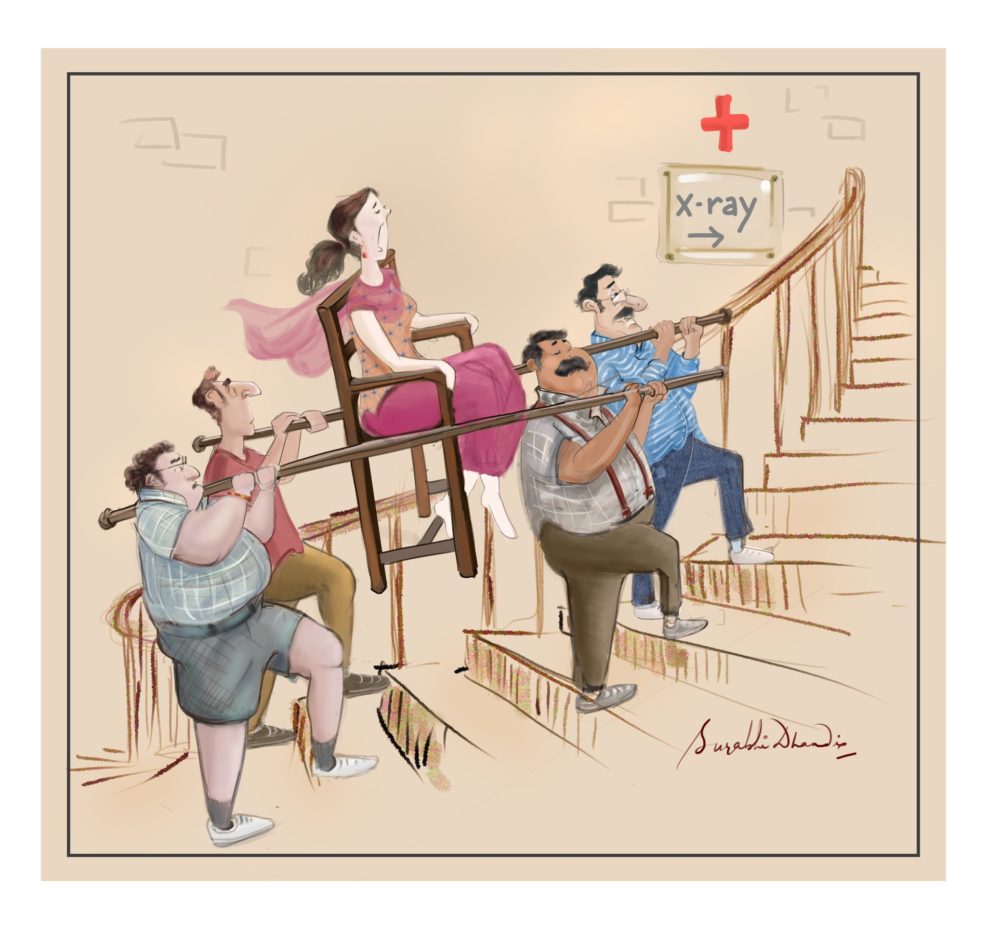
From riding on a vegetable cart to being carried in a no-frills palanquin-like wooden chair for an x-ray, I used myriad modes of transport from Sunderban in the east to Jaipur in the west, following a foot injury.

I snapped the critical weight-bearing bone (the talus) in the foot while alighting from a small, rocking wooden boat on to the hard, concrete surface of a jetty. A torrent of excruciating pain overwhelmed my senses. I have faint recollection of removing the calliper that had shielded the rest of the polio-affected limb from injury and being carried to a bunk in the underdeck of our boat. The first-aid kit on the boat was ill-equipped – with only a near-empty can of an anti-inflammatory spray, my pain threshold was being tested to its limits.

Continue reading