Indian PhD students say long Australian visa delays have put their lives on hold

By Neena Bhandari

Sydney, 12.01.2023 (IPS): When Megha Jacob, who had been applying for a doctoral degree at various overseas universities, received an offer from the Australian National University’s Department of Chemistry to do a fully funded PhD, she was thrilled and immediately accepted the position. It was January 2022. She submitted her visa application and resigned from her job at the Indian Institute of Technology Madras. One year later, she is still waiting for her visa to be processed.

Several international Indian students enrolled in doctoral degree courses in Australia’s leading universities have been waiting for their visas to be approved for months, some for up to two years. “The protracted delays have put our lives on hold. We seek clarity and a definitive timeline so we can plan our future,” say students from one of the WhatsApp groups formed by Indian doctoral students facing Australian visa processing delays.

Since the easing of Australia’s stringent COVID-19 restrictions, these students allege, the visa processing time for doctoral degree students has increased. “The median processing time for offshore student visa application was 18 days for the Postgraduate Research Sector in November 2022,” an Australian Department of Home Affairs (DHA) spokesperson tells IPS. However, the most recent processing time on the DHA website for 500 – Student visa (subclass 500) Postgraduate Research Sector shows 90 percent of applications are processed in 10 months.

Continue reading

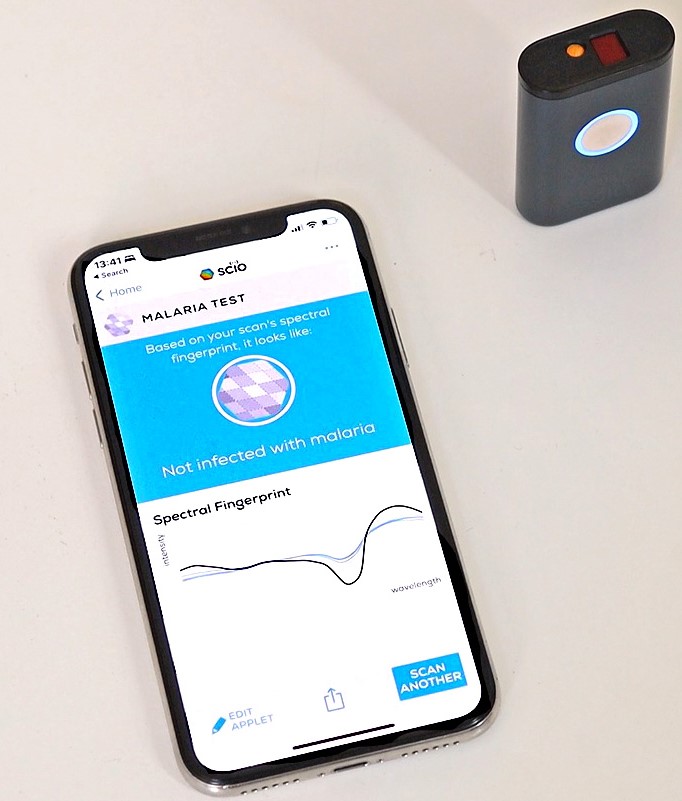
Smartphone operated tool uses light beam to detect malaria

By Neena Bhandari

Sydney, 16.12.2022 (SciDev.Net): A quick, affordable, non-invasive detection tool could help accelerate progress in meeting the UN Sustainable Development Goals’ target to eliminate malaria, say researchers who developed it.

The WHO’s global technical strategy for malaria 2016–2030 aims to reduce malaria incidence and mortality rates by at least 75 per cent by 2025 and at least 90 per cent by 2030 against a 2015 baseline. But by 2021, malaria case incidence and deaths are both off track by 48 per cent. Based on the current trajectories, the world will be off track in reaching the malaria targets by 88 per cent, according to Abdisalan Noor, head of the Strategic Information for Response Unit, WHO Global Malaria Programme.

To help get back on track, researchers from Australia and Brazil have come up with a handheld, smartphone-operated, near-infrared spectrometer that shines infrared light for about five seconds on a person’s ears, arms, or fingers to detect changes in the blood caused by malaria.

Continue reading

Investing in global agri-R&D also ‘benefits donor countries’

By Neena Bhandari

Sydney, 09.12.2022 (SciDev.Net): Investment in international agricultural research and development (R&D) not only increases the capacity of lower-income countries to tackle food insecurity and manage natural resources but also brings significant returns to donor countries like Australia, says a study commissioned by the Crawford Fund.

The study makes a case for increasing the proportion of the development assistance budget allocated to international agricultural R&D. “Collaborative research is a two-way learning. Both the recipient and donor countries benefit from the exchange of knowledge, insights, science and technical ideas,” says Neil Byron, lead author of the study launched on 1 December in Canberra.

Currently, only 2.5 per cent of Australia’s aid budget goes to agriculture R&D. “All the evidence suggests that we are seriously underinvesting. We can easily double or triple the [agriculture R&D] aid because the benefits — social, economic and environmental payoffs — are so much greater than the costs,” says Byron, director of Alluvium Consulting Pty Ltd. which prepared the report for the Crawford Fund.

Continue reading