By Neena Bhandari
Sydney, 02.08.2024 (The Hindu): Arminio Ribeiro’s ancestral home, built by his grandfather in 1915, is a stone’s throw from the whitewashed Saint Sebastian chapel in Fontainhas – Goa’s oldest Latin quarter, tucked away from the din of the capital city, Panjim. He returned to this home of his birth in 2000, drawn by the familiar neighborhood and its close-knit community.
“It was like returning to a large joint family with its share of fun and occasional friction”, says Ribeiro, whom I meet in the rear part of the house, which has been his office since 1996.
Many families, like Ribeiro’s, have resided for generations in Fontainhas, which was originally part of Talegaon village. It is only around mid-19th century, with the administration relocating to Panjim from Old Goa, that urbanization plans began to take shape, connecting residential and work areas.
A passage, Corte-de-Oiteiro, was carved through the Altinho Hill that extended all the way to the chapel, which has been the epicenter of community gatherings and functions. Open plots and traditional homes of the original occupants, such as fishermen and clerks, were purchased by the new occupants, who were professionals, academicians and administrators.
“The latter benefitted from the proximity of the [Fontainhas] neighbourhood to their workplace. These new occupants re-modelled the existing houses, sometimes adding a first floor. Most of the larger houses, accommodating multiple generations, featured a central courtyard. It created a diverse yet interdependent community”, says Ribeiro, an alumnus of the Goa College of Architecture. He recalls the tree-lined narrow streets that used to be their playground and a place for the residents to socialize.
The Portuguese colonial influence significantly shaped the architectural landscape of Fontainhas. The affluent Hindu and Christian families built grand homes with exterior facades in the Indo-Portuguese architecture style and interiors in the traditional Konkan architecture.
“This blend of the two architecture styles created a unique urban landscape”, says Ribeiro. “The traditional Konkan houses were huddled close together mostly with a ground floor and an attic, locally called a maddo. They were inward looking with very small openings on the streets”.
“As the settlements began to become denser, for reasons of health and hygiene, the health office placed conditions for minimum lighting and ventilation standards and disposal of sewage which initially was carried by headloads to nallahs or flowing waterways. The sewerage system was laid only in the 20th century”, he adds.
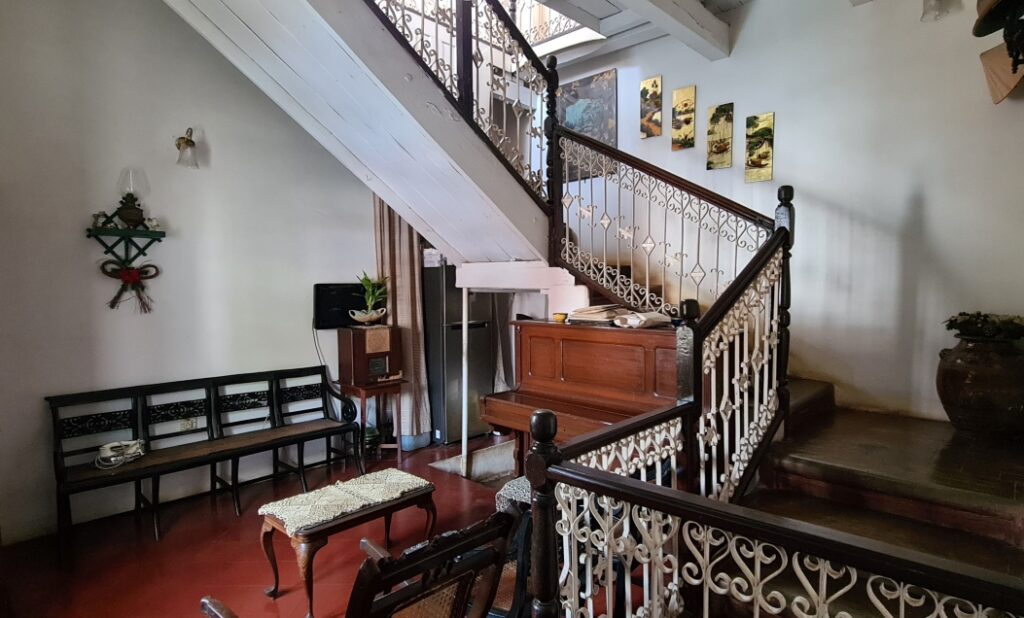
These heritage houses in Fontainhas require structural changes to incorporate modern amenities. Ribeiro has made minimal modifications, such as adding another toilet on the first floor and replacing old toggle electric switches, to preserve the house’s original charm. He has been mindful that the heritage belongs to the extended family as well, and he wanted to retain the memories of their childhood holidays spent here together.

Fontainhas is a designated heritage conservation zone, but Ribeiro laments that the Conservation Committee has been prioritizing re-construction over conservation. “These houses are beautiful as it is and the facades should not be tinkered in the race to modernize”, he asserts.
In recent years, Fontainhas has become a magnet for tourists, bringing both benefits and challenges. The influx of visitors, especially on weekends, disrupts the peace and the streets are strewn with litter. To escape the chaos, some residents like Ribeiro retreat to their village home, but often find their garden and plants trampled upon on return.
“It is very upsetting,” says Ribeiro, who is passionate about conserving the essence of Fontainhas and has a whole new appreciation for residents of Venice and other European cities overwhelmed by tourists.
The narrow laneways get choked with vehicles; and with most families owning multiple cars, friction over parking spaces is not uncommon. Despite the challenges, he says that it would take something really compelling to force him out of Fontainhas. The next generation, however, is moving to bigger cities lured by better career prospects.
Many houses are partly vacant, occupied mostly by elders, and maintaining them comes at a price. Keeping this in mind, the regulations permit 25 percent of the homes to be used as a commercial premise.
“It is a good sustainable standard, which while achieving its objectives will also address the issue of overcrowding”, says Ribeiro, founder and head of Arminio Ribeiro and Associates. He cautions that over commercialization could result in destruction of this area. A lot of restaurants, cafes and boutique stores moving into the area are occupying the entire house.
“The high rentals offered by commercial enterprises is causing residents to lease out their entire house and relocate to other wards in the city at a much lower rent. Fontainhas and other residential wards are slowly being emptied of their residents. We know that in the absence of residents, an entire layer of culture stands erased”, he adds.
To preserves the essence of Fontainhas for future generations, he has been advocating for implementation of a carefully considered urban development policy that reconnects the streetscape to the community.
He regularly mentors architectural students on conservation and actively collaborates with other architects and residents of Panaji to save Panjim city’s architectural heritage and culture. This has inspired residents in other cities to take up similar action.
Besides taking a keen interest in restoration and renovation works of heritage houses and buildings, Ribeiro has designed various projects relating to social infrastructure such as educational facilities, halls and community infrastructure for tribal communities, nursing homes, farmer training and facilitation centers.
© Copyright Neena Bhandari. All rights reserved. Republication, copying or using information from neenabhandari.com content is expressly prohibited without the permission of the writer and the media outlet syndicating or publishing the article.
You May Also Like