By Neena Bhandari
Sydney, 02.08.2024 (The Hindu): Gerard da Cunha’s quest to discover his roots led him to Goa at the impressionable age of 19. His maternal grandparents had moved to Lahore and his paternal grandparents to Mumbai. His father worked in a bank and so they lived in various cities, wherever he was posted. During summer vacations, they would visit one set of grandparents, but never Goa.
He instantly fell in love with the place, especially it’s architecture, and decided to make Goa his home as soon as it were possible. After graduating from the School of Planning and Architecture in Delhi and working in the national capital for few years, he felt it was time to set up his architectural practice in Goa in 1984.
He was intrigued by the Indo-Portuguese house, which harmoniously blends the double-storey rural Portuguese house and the traditional Goan house designs. He began documenting and photographing these houses, and published the seminal Houses of Goa book written by Heta Pandit and Annabel Mascarenhas in 1999. Around the same time, he held an exhibition of Goan houses in Panjim, which travelled to Lisbon and Porto, Mumbai and Delhi.
The overwhelming success of the exhibition led to the genesis of the Houses of Goa Museum, which became the permanent home for the exhibits. It serves as a homage to the unique fusion of the Indo-Portuese architectural design elements, attracting a regular stream of local visitors, who are fond and proud of their houses; and national and international tourists wanting to get a glimpse of the Goan houses.

The museum, in Torda village, sits as a traffic island within a larger complex that houses a pre-school and a primary school. It helps vehicles to go around and also knits the adjoining buildings together.
Da Cunha says, “It serves as an interpretation center, providing an overview of the different kinds of Goan houses, and also delves deeper into the whole gamut of columns and beams, furniture and music, and the cultural significance of the Indo-Portuguese house”.
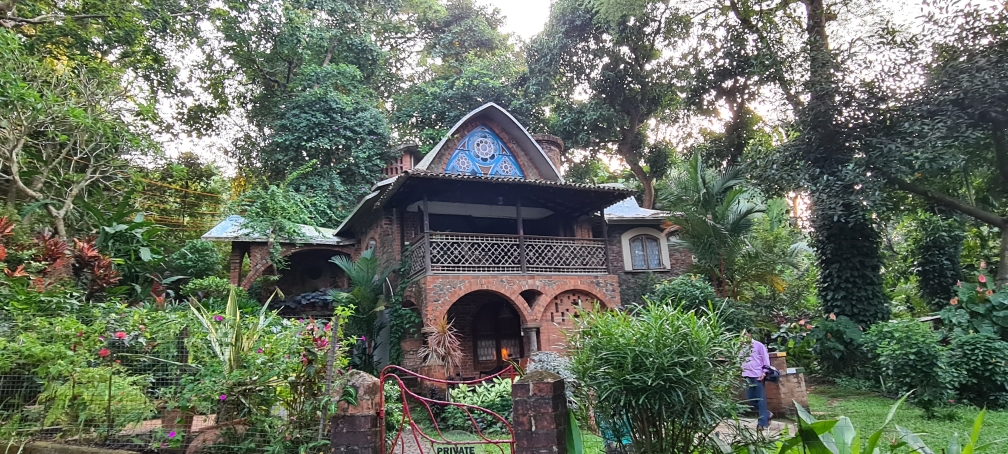
Besides its aesthetic appeal, he explains, “The Indo-Portuguese houses are characterized by their ecological sensibility and use of sustainable low-cost local materials that reflect a deep understanding of climatology. The high ceilings, spacious verandahs, courtyards and a strategic ventilation system are all designed to mitigate the region’s tropical humid heat”.
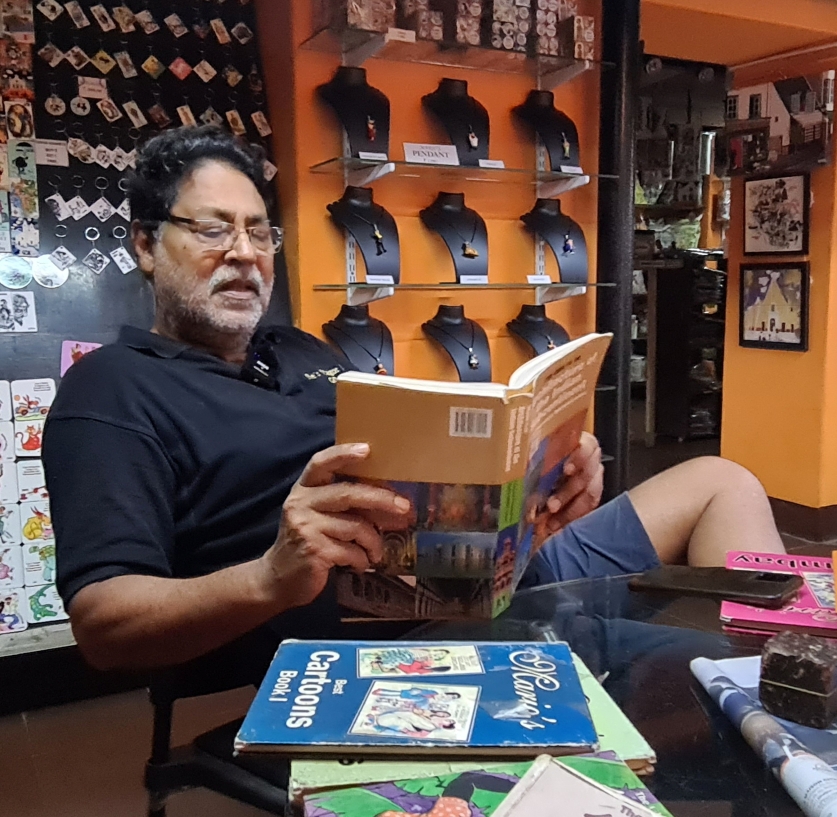
We meet in a 120-year-old home, which is his office and the Mario Gallery. There is a gentle sea breeze flowing through a trellis below the window, cooling the room. The oyster shells on the windowpanes are shimmering in the mellow light of the setting sun. He explains that these shells were picked up from particular river banks and used in houses instead of glass, which at that time was imported from Europe and hence very expensive.
He is committed to using local and recycled materials made from waste. The school building, for example, is made from spare or broken windows, doors, grills, flooring and waste material sourced from students. The walls of the school’s amphitheater are made from 25,000 recycled glass bottles.
Striving to keep Goa’s architectural heritage alive
The buildings designed by da Cunha, founder and principal architect of Architecture Autonomous, are a testament of his green philosophy. His recent projects in Goa include Panaji’s Mangrove Boardwalk and Krishnadas Shama Goa State Central Library; and current projects include the Panjim Jetty and Public Park at Patto in Panaji.
He believes the next generation of architects and architectural students from all over the country that visit the Houses of Goa Museum and the schools are definitely taking something positive on how waste can be reused and sustainable materials incorporated in design. He used to conduct eight-day residential workshops, where architectural students stayed in tents and built with their hands.
Each year, about 1500 students attend the half-day workshop and learn hands-on from the award-winning architect about his design philosophy and the buildings. “I believe in spreading my message through firsthand experience. I am in the process of setting up the Museum of Indian Architecture, which will be part of the complex”, says da Cunha, who has recently published the Vernacular Architecture of India book by Tejinder S. Randhawa.
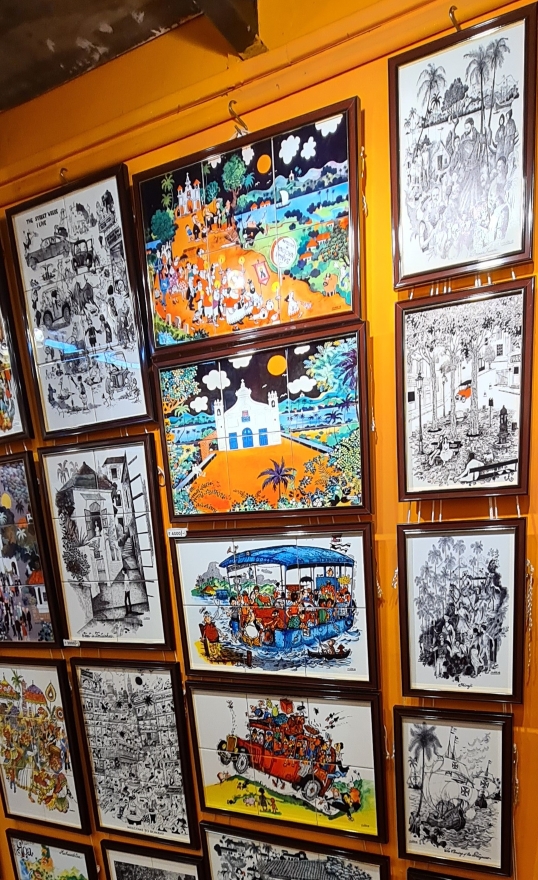
He has also been promoting the legacy of Mario Miranda by leveraging merchandise and publications featuring the renowned Goan cartoonist and painter’s iconic artworks. This has helped raise the much-needed funds to support the artist’s family and also provide employment to local people.

From fridge magnets to apparel imprinted with his works, for example, are gifted at numerous international conferences held in Goa; a picture of Mario is printed in a book on linguistics, published from London every two years; and recently a restaurant in Manchester (UK) has bought Mario’s works to display.
“Mario’s works are socially relevant and have an enduring appeal, resonating both locally and internationally,” says Da Cunha, who is striving to keep his legacy and Goa’s architectural heritage alive.
© Copyright Neena Bhandari. All rights reserved. Republication, copying or using information from neenabhandari.com content is expressly prohibited without the permission of the writer and the media outlet syndicating or publishing the article.
You May Also Like