Category Health & Science

A life battle with Poliomyelitis

By Neena Bhandari

It was a meek October morning in 1967, only a month away from my third birthday, I had worn my frilled frock and white laced shoes to go and receive the triple polio vaccine. As I sang and danced along the way, making it difficult for my maternal grandfather to keep pace, little did I know that it was the last time I would be walking by myself.

Later that night, I remember my grandmother cuddling my tiny body burning with high fever as I complained of acute pain in my legs. She had carried me to the bathroom, where my legs collapsed.

In the days that followed, many more children like me began pouring into the Sawai Man Singh (SMS) hospital in Jaipur (Rajasthan).  It was two weeks before the outbreak was diagnosed as `Poliomyelitis’. The word didn’t mean much to me then and I certainly didn’t realise the implications it would have for a life just beginning.

Continue reading

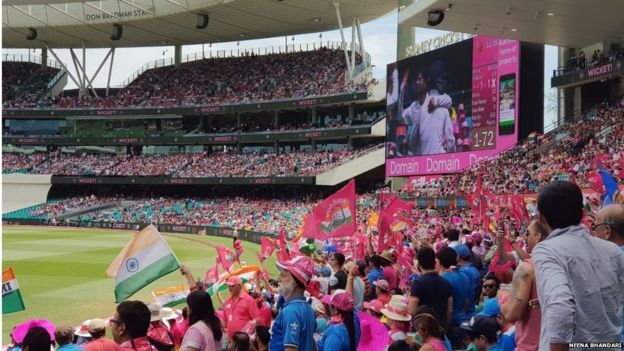
India V/s Australia: सिडनी का ग्राउंड गुलाबी क्यों हो गया था?

भारत और ऑस्ट्रेलिया के बीच खेले जा रहे पिंक टेस्ट मैच के तीसरे दिन सिडनी का हरा-भरा ग्राउंड गुलाबी हो गया. स्तन कैंसर के प्रति जागरुकता फैलाने के लिए यहां क्रिकेट और संस्कृति का अनोखा संगम देखने को मिला. मीडिया रिपोर्ट्स के मुताबिक ग्राउंड पर गुलाबी साड़ी पहने कम-से-कम सौ महिलाएं मौजूद थीं, जो ब्रेस्ट स्क्रीनिंग और केयर के प्रति जागरुकता फैलाने के लिए आईं थीं. ना सिर्फ औरतों बल्कि मर्दों ने भी गुलाबी पगड़ी, कमीज़ और टोपी पहनकर इस अभियान का समर्थन किया.

Continue reading on BBC Indian Languages:

BBC Hindi: https://www.bbc.com/hindi/sport-46772040

BBC Punjabi: https://www.bbc.com/punjabi/international-46770190

BBC Telugu: https://www.bbc.com/telugu/international-46772983

English Translation: English Translation of Pink Sari

© Copyright Neena Bhandari and BBC Indian Languages. All rights reserved. Republication, copying or using information from neenabhandari.com content is expressly prohibited without the permission of the writer and the media outlet syndicating or publishing the article.

Healthcare eludes poorer women in rural Asia Pacific

By Neena Bhandari

Sydney, 21.12.2018 (SciDev.Net): Rural women in low-income households cannot access healthcare services due to distance and financial reasons. However, overall, healthcare access has improved in 27 countries of the Asia Pacific region over the past decade, says a new joint report by the Organisation for Economic Co-operation and Development (OECD) and the World Health Organization (WHO).

Health at a Glance Asia-Pacific 2018 notes that in Nepal and the Solomon Islands, about three in four women with the lowest household income reported difficulties in accessing healthcare due to financial reasons; two in three reported having unmet care needs due to distance.

The report highlights that achieving Universal Health Coverage and the Sustainable Development Goals (SDGs) is based on the “leave no one behind” premise.

Continue reading on SciDev.Net Asia & Pacific edition

© Copyright Neena Bhandari and BBC Indian Languages. All rights reserved. Republication, copying or using information from neenabhandari.com content is expressly prohibited without the permission of the writer and the media outlet syndicating or publishing the article.