
Category Gender

Cuisine from the arid earth

By Neena Bhandari

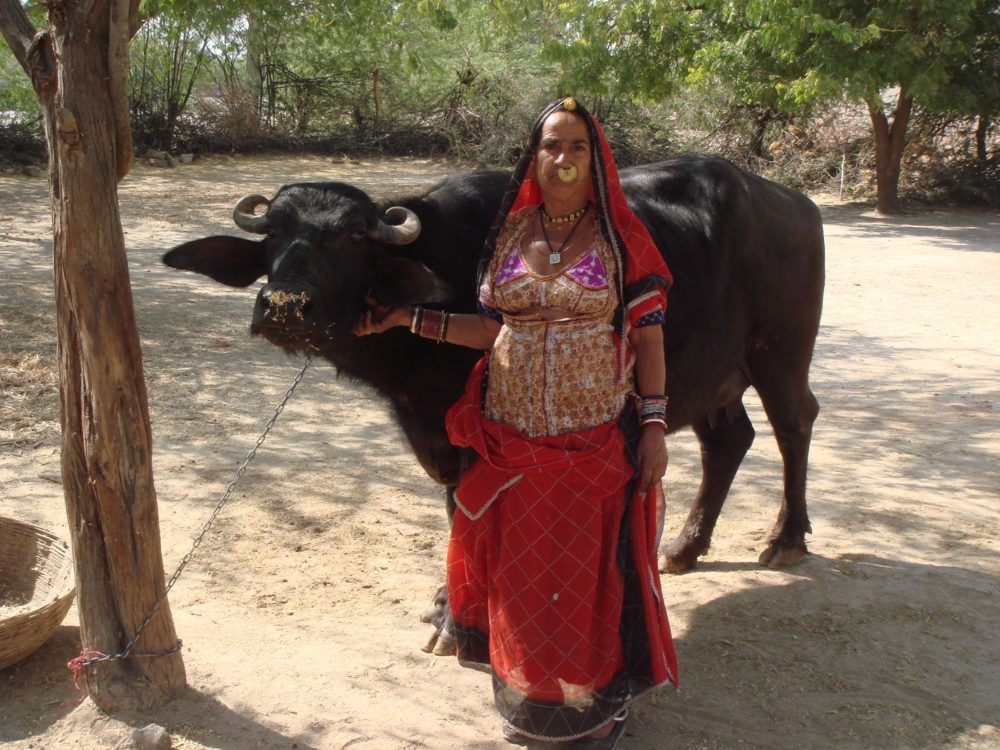
Guda Bishnoiyan & Khejarli villages (Rajasthan), India, 04.03.2012 (WFS/The Hindu): Traditional western Rajasthani delicacies are fast becoming a gourmet’s delight in India and abroad. In fact, no Marwari feast is complete without the ‘exotic’ Sangari, cooked as a dry vegetable or with gravy. This fruit of the versatile Khejari (Prosopis cineraria) tree, indigenous to the vast Thar Desert, has provided nutrition and nourishment to the local communities for generations.

As the sun rises on the eastern skyline, Chunni Bishnoi, 65, begins milking her three buffaloes and three cows in the outer courtyard of her `pucca house’, shaded by the thorny Khejari trees that grow thick and green in the villages of Guda Bishnoiyan, 22 km, and Khejarli, 26 km south-east of Jodhpur in the western Indian state of Rajasthan.
Continue reading

Good nutrition essential to reduce maternal & infant mortality

By Neena Bhandari

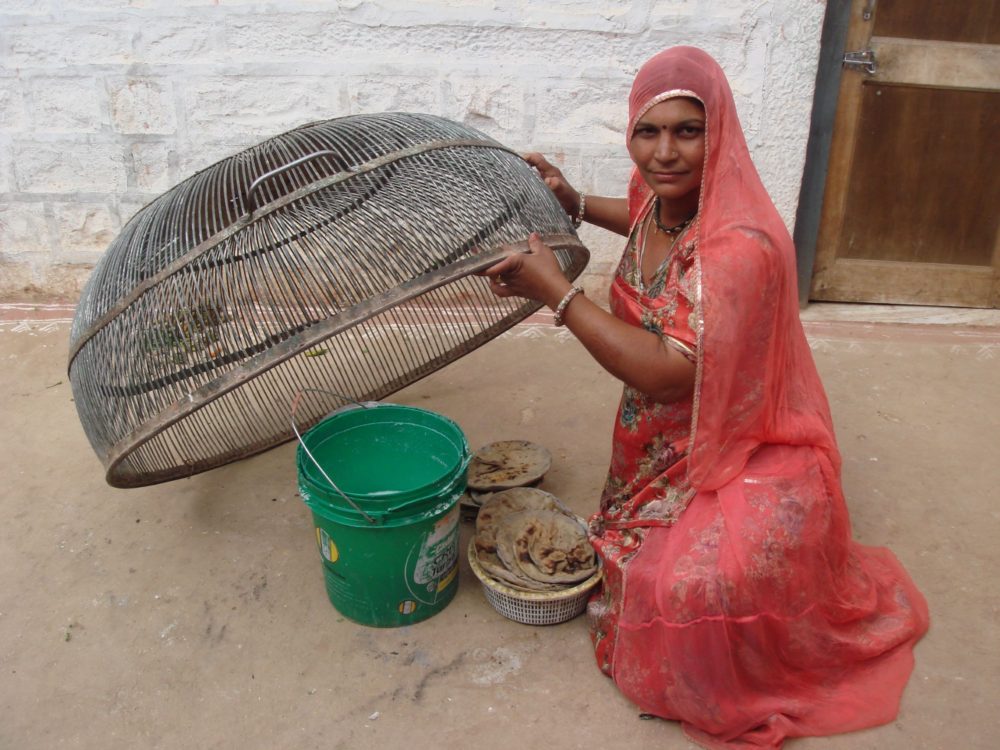
Jhakaron ki Dhani (Jodhpur, Rajasthan) 11.02.2012: In the dusty village of Jhakaron ki Dhani, 25 km from Jodhpur in western Rajasthan, early marriage and early motherhood are not uncommon. Shamu Meghwal was married at the age of 13 and her first baby was born at 15. At 25, she is the mother of four kids and has just lost her husband. Visibly anaemic, she epitomises the many young women in her community experiencing weakness, back and abdominal pain.

It is estimated that more than half of all married women in India are anaemic and one-third of them are malnourished (have a body index below normal). “These women are already at a lower health level when they get pregnant. They don’t receive proper nutrition, especially vital during pregnancy. This makes them anaemic resulting in long-term consequences on their health”, says Dr Kanta Tiwari, a known gynaecologist, who has been working in Jodhpur and surrounding areas for the past 41 years.

Continue reading

Not quite Harry Potter, but Jodhpur’s broom-makers have tales of their own

By Neena Bhandari

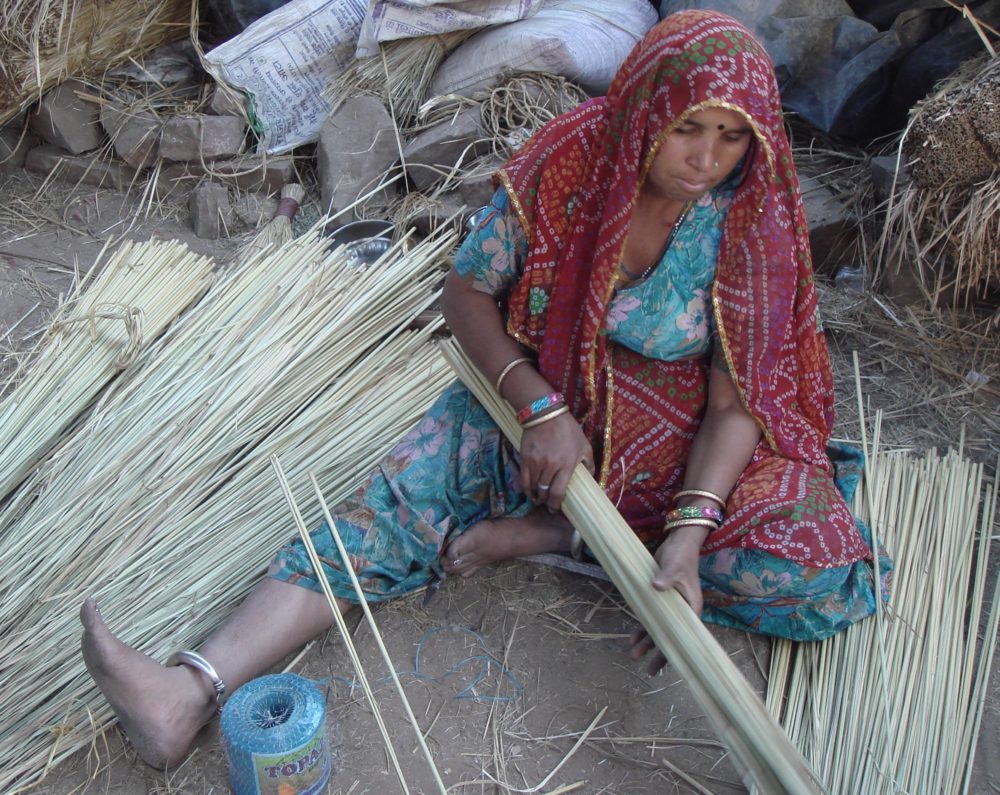
Jodhpur (Rajasthan, India), 26.09.2011 (WFS): Lifting her translucent red tie and dye cotton veil, Sunder Devi, 45, dexterously sorts moonjh (Saccharum munja). Nearby her 14-year-old daughter, Kiran, niftily assembles them into brooms. Theirs is one of the 150 families in Jodhpur’s Banjara colony, whose livelihood depends on the humble broom.

Rural women in this western Indian state of Rajasthan have been making brooms from locally available materials to suit their own needs and also for commercial sale. Every three months, Sunder Devi’s husband, Gopal Bhai, goes to Alwar and Etah in the neighbouring state of Uttar Pradesh to buy moonjh.

Continue reading