
Category Disability

A life battle with Poliomyelitis

By Neena Bhandari

It was a meek October morning in 1967, only a month away from my third birthday, I had worn my frilled frock and white laced shoes to go and receive the triple polio vaccine. As I sang and danced along the way, making it difficult for my maternal grandfather to keep pace, little did I know that it was the last time I would be walking by myself.

Later that night, I remember my grandmother cuddling my tiny body burning with high fever as I complained of acute pain in my legs. She had carried me to the bathroom, where my legs collapsed.

In the days that followed, many more children like me began pouring into the Sawai Man Singh (SMS) hospital in Jaipur (Rajasthan).  It was two weeks before the outbreak was diagnosed as `Poliomyelitis’. The word didn’t mean much to me then and I certainly didn’t realise the implications it would have for a life just beginning.
Continue reading

On a foot and a prayer

By Neena Bhandari

A Cancelled flight, a lost suitcase, a stolen wallet are exigencies we may plan for while travelling, but I had never considered the possibility of an unexpected injury, until it happened during one of my annual sojourns in India. It revealed the dichotomy between the avant-garde and primitive modes of transport and healthcare facilities that exist in the country.

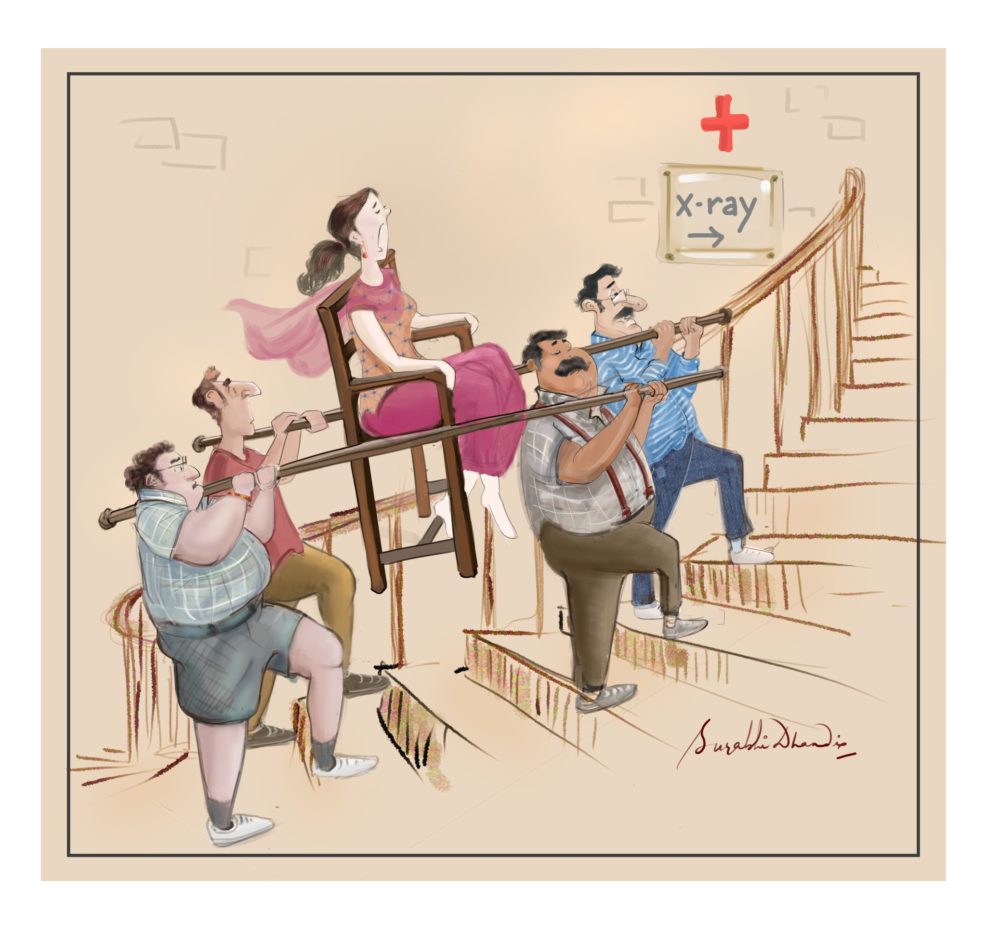
From riding on a vegetable cart to being carried in a no-frills palanquin-like wooden chair for an x-ray, I used myriad modes of transport from Sunderban in the east to Jaipur in the west, following a foot injury.

I snapped the critical weight-bearing bone (the talus) in the foot while alighting from a small, rocking wooden boat on to the hard, concrete surface of a jetty. A torrent of excruciating pain overwhelmed my senses. I have faint recollection of removing the calliper that had shielded the rest of the polio-affected limb from injury and being carried to a bunk in the underdeck of our boat. The first-aid kit on the boat was ill-equipped – with only a near-empty can of an anti-inflammatory spray, my pain threshold was being tested to its limits.

Continue reading

Why you need to keep employees who experience the onset of disability

By Neena Bhandari

Sydney, 16.10.2017 (HRM): People who experience the onset of disability through illness are often managed out of the workplace. But helping them to stay usefully employed can offer benefits on both sides.

While running down a steep hill in Oman, Mark Glascodine suddenly felt that he was not in full control of his body. It was 1992 and he was working for Shell. What followed was six months of inconclusive medical tests. He felt slight imbalance at times, but it did not impede his work as the depot manager. It took five years before a neurologist in Melbourne, where he was then posted, confirmed that he was suffering from Friedreich’s Ataxia, a rare genetic disability that affects one in 50,000 people.

At 32, it was deemed a late onset in his case, but his condition soon began to deteriorate. The Shell HR team explained to him about medical retirement, which he took in 2004. “They were being nice. It helped not having to sell my house and allowed me to retrain in career counselling for people with disability,” he says.

Continue reading