
Category Disability

How Accessible Are Apartments and Do They Stack Up?

By Neena Bhandari

Sydney, 27.06.2022 (The Urban Developer): Accessibility in multi-residential apartment buildings has been wanting, but now developers and architects are incorporating features to make units more liveable for everyone. However, requirements of additional space and automation come at a cost.

“An additional 15 per cent floor area internally is required to fit all of the additional spatial requirements in a high physical support unit,” says Thirdi group’s general manager Ashleigh Button. “In a market where construction costs are rising, every square metre counts. So, spatial constraint is the biggest challenge to incorporate accessibility.”

Access needs in the residential market encompass a larger cohort—people with disabilities, older Australians and families. “We are seeing an overlap between general liveability and disability design in apartment buildings,” says Allen Jack Cottier Architects’ director Brian Mariotti.

How accessible are apartments and do they stack up?

Continue Reading on The Urban Developer

© Copyright Neena Bhandari. All rights reserved. Republication, copying or using information from neenabhandari.com content is expressly prohibited without the permission of the writer and the media outlet syndicating or publishing the article.
Cultural divide that locks Indigenous people out of key NDIS supports

By Neena Bhandari

Sydney, 20.06.2022 (Hireup): For most Aboriginal and Torres Strait Islander people with disability, the NDIS remains riddled with hurdles that make getting on to the scheme and navigating it difficult.

That’s according to Indigenous disability service providers, including Shanelle Beazley, sector development coordinator at Kurranulla Aboriginal Corporation, which services the Sutherland and St. George areas in New South Wales. She says the NDIS requires sufficient evidence to be satisfied the person needs disability support. For most Indigenous people, getting that evidence is the most challenging part of navigating this scheme.

“Most Aboriginal families have sufficient paperwork acknowledging their disability, such as Autism Spectrum Disorder (ASD) or psycho-social disabilities — bi-polar or schizophrenia, but they lack documentation detailing its impact on their everyday lives to satisfy the NDIS,” Beazley adds.

Continue reading

Challenges providers face in delivering disability supports to remote Indigenous communities

By Neena Bhandari

Sydney, 27.05.22 (HireUp): Aboriginal and Torres Strait Islander people are twice as likely to experience disability, and more likely to experience increased barriers to accessing disability supports compared to non-indigenous Australians. In this first of the three articles, Indigenous service providers share the many challenges they face in delivering disability services and supports to their communities in remote, regional and rural areas.

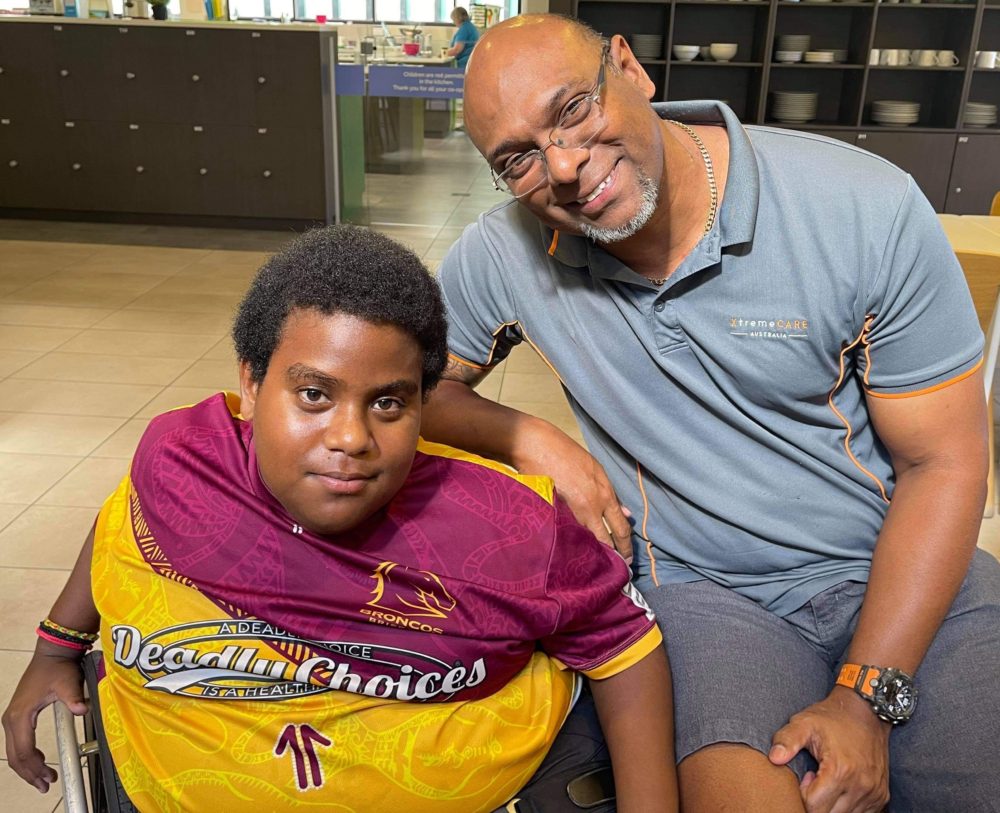
“Many people in rural and remote Indigenous communities still do not know about the National Disability Insurance Scheme (NDIS) and its role and functions in disability care,” says William Tatipata, Managing Director of Xtremecare Australia, an Aboriginal and Torres Strait Islander disability service. “We begin with making them aware of the scheme [how to apply and obtain a disability assessment] and then educating them on the supports and services the scheme offers.”

Tatipata says, “Our people are confused around what services and supports are covered by ‘health’ and what falls under the NDIS. If a diabetic person requires a new diabetes monitor, for example, it is covered by ‘health’. But if the participant’s motor skills are impaired, the NDIS will fund the monitor following a functionality assessment by an occupational therapist.”

Continue reading